Online Reviews & Reputation: Why They Matter More Than Ads
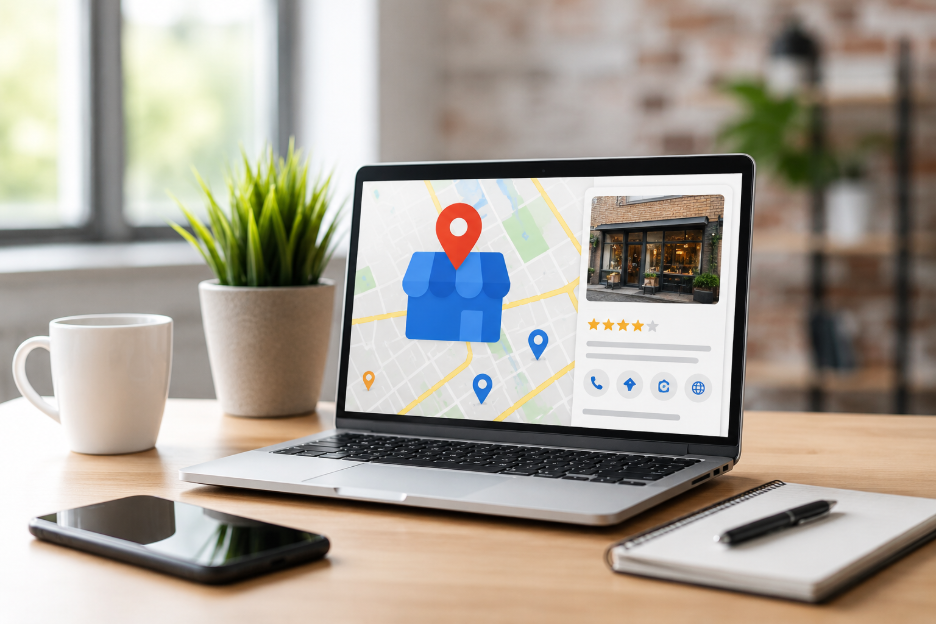
For local businesses, online reviews can influence a customer's decision before an advertisement gets a second glance. A strong review profile provides independent feedback about service quality, reliability, communication, and customer experience. That makes online reviews local business owners should treat as an active part of their marketing strategy, not an afterthought. Reviews can also support local visibility as part of GBP optimization, because Google considers review count and ratings among the information used to assess prominence in local search.
Ads can introduce a business to someone who has never heard of it. Reviews answer the next question: "Can I trust this business?" That distinction matters for plumbers, contractors, restaurants, landscapers, home service companies, professional services, and other local providers where customers often want evidence before making contact.
Why Reviews Can Influence a Customer More Than an Ad
An advertisement is created by the business. A review comes from someone who has already paid for the service or purchased the product.
Customers know the difference.
An ad might say that a company is reliable, responsive, experienced, or highly rated. A review can provide specific details about what actually happened. A customer may mention that a technician arrived on time, explained the repair clearly, kept the property clean, or followed up after the work was completed.
That detail gives the next customer something concrete to evaluate.
Reviews also appear close to the point where people make decisions. Google displays review information on Business Profiles in Search and Maps, allowing people to compare businesses while they are actively researching local services.
This does not mean advertising has little value. Ads can generate awareness, reach specific audiences, promote offers, and bring immediate traffic. Reviews perform a different job by providing evidence that supports a customer's decision.
Reviews Build Trust Before the First Conversation
A local customer may have several businesses to choose from, especially for common services. Before calling, they may check:
- Overall rating
- Number of reviews
- Recent customer experiences
- Written comments
- Business responses
- Photos uploaded by customers
- Complaints and how they were handled
- Mentions of the specific service they need
A business with detailed, recent reviews gives prospects more information to work with.
The wording inside reviews can matter too. Customers often describe services using everyday language. For example, a homeowner might mention "basement water cleanup" while another discusses "emergency plumbing repair." These real-world descriptions can provide useful context about the types of services a business delivers.
Sound UP Marketing can help local businesses connect reputation efforts with broader search and marketing activity so reviews support the customer journey instead of sitting separately from the rest of the website and local presence.
Google Reviews Can Affect Local Search Visibility
Reviews are not simply a trust signal for customers. Google states that local search results are mainly based on relevance, distance, and prominence. Google also says that prominence can be influenced by information such as links and the number of reviews a business has, while more reviews and positive ratings can help local ranking.
For local businesses, this makes reviews an important part of local SEO rather than just a reputation metric. A consistent flow of genuine reviews can provide customers with useful information while strengthening the signals surrounding a business's local presence. A practical getting more Google reviews process can also help businesses build a stronger review profile over time.
This does not mean collecting hundreds of reviews guarantees a top position.
A business can have a large number of reviews and still rank differently depending on the searcher's location, the search query, competing businesses, and other local ranking factors. Google does not offer businesses a way to pay for a better local ranking.
The practical lesson is simple: review management should be part of local SEO, but it should not be treated as the only ranking tactic.
A complete local presence also includes accurate Business Profile information, relevant website content, appropriate categories, useful service pages, local authority, and a consistent customer experience.
Reputation Management Goes Beyond Getting Five Stars
A strong reputation is not created by chasing a perfect rating.
Customers pay attention to how a business handles criticism as much as they notice positive comments. A thoughtful response to a negative review can show that the business takes customer concerns seriously.
For businesses working on reputation management Long Island, the focus should include monitoring reviews, responding appropriately, identifying recurring complaints, and improving the service issues behind those complaints.
A useful review response should:
- Acknowledge the customer's concern.
- Remain calm and professional.
- Avoid revealing private customer information.
- Address the issue without becoming argumentative.
- Move detailed discussions to a private channel when appropriate.
- Show that customer feedback is taken seriously.
A defensive response can make a small complaint appear much larger. A respectful response can show future customers how the company behaves when something does not go as planned.
Getting More Google Reviews Without Breaking the Rules
Businesses do not need complicated tactics to request reviews. Google allows businesses to ask customers for reviews through a Google link or QR code. However, reviews must reflect genuine customer experiences. Google specifically prohibits incentives offered in exchange for reviews, review changes, or removal of negative reviews.
A simple review generation process can work well:
1. Ask at the right time
Request feedback after the customer has received the service and had a reasonable opportunity to evaluate the experience.
2. Make the process easy
Send a direct review link rather than asking customers to search for the business themselves.
3. Keep the request neutral
Ask for an honest review rather than requesting a specific rating.
4. Use several appropriate channels
Depending on the business, review requests can be sent by email, text message, receipts, follow-up messages, or QR codes.
5. Respond consistently
Thank customers for positive feedback and address genuine concerns professionally.
Google recommends asking customers to leave reviews and notes that businesses can use a review link or QR code to make the process easier.
Reviews vs. Ads: What Each One Does
Reviews and advertising should not be treated as competing marketing tools. They serve different purposes.
| Marketing Element | Main Purpose | Customer Question It Answers | Long-Term Value |
|---|---|---|---|
| Online reviews | Build trust | "Can I trust this business?" | Can continue influencing prospects |
| Paid ads | Generate visibility | "Who offers this service?" | Depends on ongoing ad spend |
| Website content | Explain services | "Can this business solve my problem?" | Can attract organic search traffic |
| Google Business Profile | Support local discovery | "Where is this business and what does it offer?" | Supports local search presence |
| Social media | Show activity and personality | "What is this business like?" | Builds familiarity over time |
A local business can use advertising to bring people into the marketing funnel, then use its website, Business Profile, reviews, and service information to help those visitors make a decision.
That combination is often more useful than relying heavily on one channel.
Reviews Can Support AI Search Visibility Too
Search behavior is changing as people increasingly encounter AI-generated summaries and conversational answers. Google's local listings can include AI-generated review summaries that analyze reviews and highlight common themes, based on recent review information.
This gives businesses another reason to focus on genuine customer feedback.
AI search optimization is not simply about inserting keywords into review requests. It involves making sure a business has clear, trustworthy, consistent information across its website and local profiles. Reviews can contribute firsthand customer language that helps describe services, experiences, and common customer concerns.
Businesses should still avoid trying to manufacture specific phrases in reviews. Authentic customer feedback is more useful than artificial keyword placement.
A Strong Reputation Needs More Than Positive Reviews
Five-star ratings alone do not tell the complete story.
A customer may see 4.8 stars but still want to know:
- Are the reviews recent?
- Do customers describe the service I need?
- Does the company respond to complaints?
- Are customers mentioning communication and reliability?
- Does the business appear active?
- Are there detailed experiences rather than one-line comments?
Recency can be especially useful because customer expectations and business operations can change. A large collection of old reviews may not tell a prospect much about the current customer experience.
Google also notes that review scores are calculated from published ratings and that scores can take time to update after new reviews are posted.
For that reason, reputation management should be an ongoing process rather than a campaign that runs for a few weeks.
How Local Businesses Can Build a Better Review Process
A practical system does not have to be complicated.
Start by identifying the customer touchpoints where satisfaction can be measured. For a contractor, that might be after project completion. For a restaurant, it could be shortly after the visit. For a professional service provider, it might be after a successful consultation or completed engagement.
Then create a consistent process:
- Identify the appropriate point for requesting feedback.
- Send a simple review request.
- Provide a direct Google review link.
- Monitor new reviews regularly.
- Respond to reviews professionally.
- Track recurring complaints.
- Improve internal processes based on genuine feedback.
- Continue requesting feedback from future customers.
The goal is not to create a profile filled with identical five-star comments. The goal is to build a credible record of real customer experiences.
What Businesses Should Avoid
Some review tactics can damage credibility or violate platform policies.
Avoid:
- Buying reviews
- Writing reviews for customers
- Offering discounts in exchange for positive reviews
- Asking only happy customers for reviews while discouraging others
- Posting fake customer stories
- Pressuring customers to change negative reviews
- Using copied review content across multiple platforms
- Arguing with customers publicly
Google states that review content should represent genuine experiences and prohibits incentives tied to posting, changing, or removing reviews.
Authenticity matters because customers can often recognize repetitive or unnatural feedback.
Building a Reputation That Supports Growth
Advertising can put a business in front of a local audience, but reputation helps determine what happens after that exposure. A prospect who sees an ad can still search the company name, read reviews, compare competitors, and look for evidence of reliable service before making contact.
That makes reviews part of the customer's decision process, not simply another marketing metric.
Local businesses can strengthen that process by consistently delivering good service, asking customers for honest feedback, responding thoughtfully, and using review insights to improve operations. A healthy review profile can support trust, local visibility, and the credibility of other marketing channels.
For businesses that need help connecting local SEO, reputation, website content, and customer acquisition, it can be useful to reach out our team at Sound UP Marketing and assess how these pieces currently work together. The strongest reputation is built through real customer experiences, supported by a clear and consistent online presence.
Frequently Asked Questions
Are online reviews important for local businesses?
Yes. Reviews can help customers evaluate a business before making contact, while Google states that review count and positive ratings can contribute to local prominence. Reviews are one part of a larger local search system that also considers relevance and distance.
How do I get more Google reviews for my business?
Ask genuine customers for honest feedback at an appropriate point after their purchase or service. Google allows businesses to provide a review link or QR code to make the process easier. Do not offer incentives in exchange for reviews.
Do Google reviews help local SEO?
They can. Google says prominence in local search can include information such as the number of reviews a business has, and more reviews and positive ratings can help local ranking. However, reviews do not guarantee a particular ranking position.
Should a business respond to negative reviews?
Yes. A professional response can acknowledge the concern and show prospective customers that the business takes feedback seriously. Responses should avoid arguments and protect customer privacy.
Are reviews more effective than paid advertising?
Reviews and paid advertising serve different purposes. Ads can create visibility and drive traffic, while reviews provide third-party evidence that can influence trust and purchasing decisions. Using both can support different stages of the customer journey.
Can reviews affect how a business appears in AI-generated local results?
Reviews can contribute to the information used in Google's local listings and AI-generated review summaries. Google says these summaries analyze reviews and highlight common sentiment and tips.
Ready to turn the
#SoundUP?
Let's connect! We’re here to help.
Send us a message and we’ll be in touch.
Or give us a call today at 631-919-7441
Agency Contact Form
More Marketing Tips, Tricks & Tools